
AMAZON

Customizing Amazon reviews

See process in Figma Slides

AMAZON

Customizing Amazon reviews

See process in Figma Slides

AMAZON

Customizing Amazon reviews

See process in Figma Slides

AMAZON

Customizing Amazon reviews

See process in Figma Slides

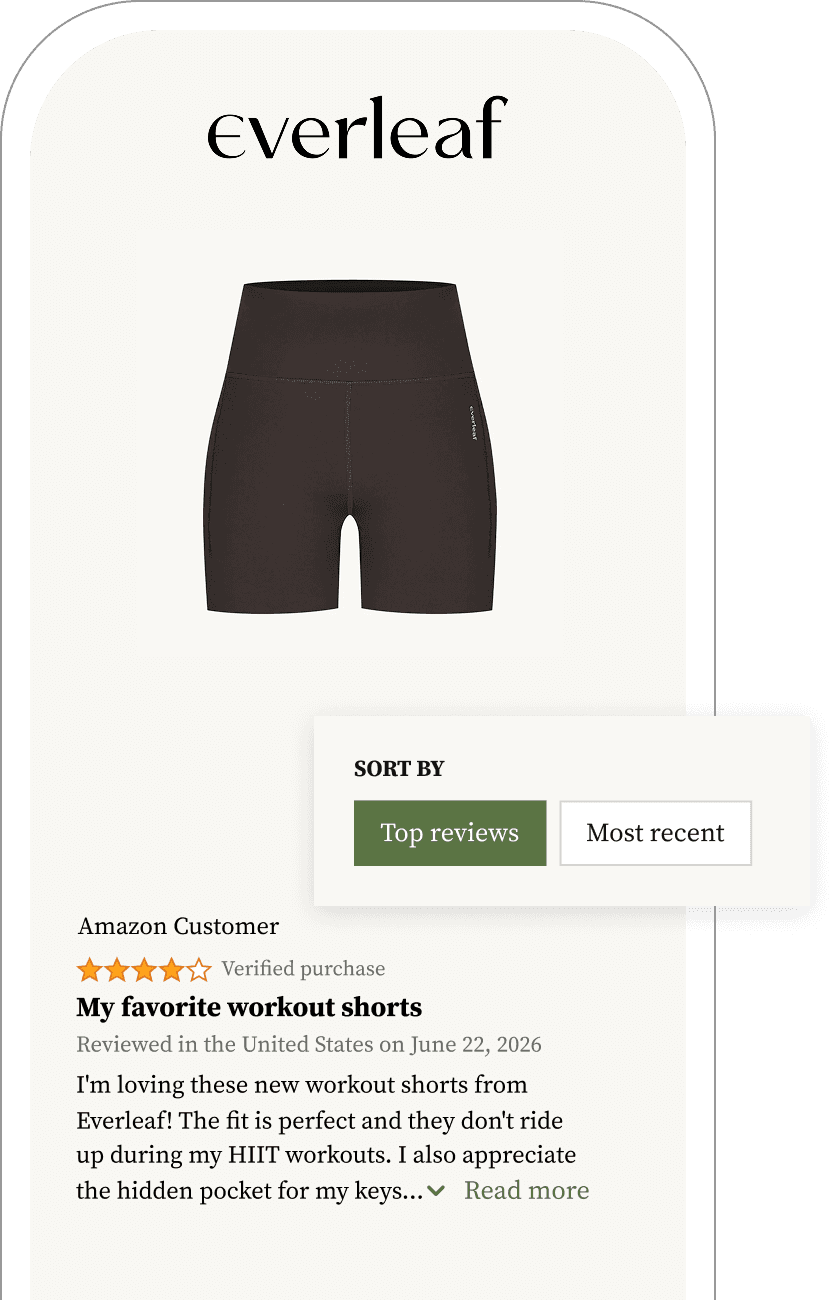
People often don't trust the reviews on direct-to-consumer (DTC) sites, because they think merchants filter out the bad ones, so they seek external reviews on Amazon to get a holistic view before purchasing. Reviews from Amazon closes that gap by bringing Amazon reviews onto DTC sites, helping merchants increase conversion by 38% on average. However, the reviews looked so much like Amazon that they felt out of place on merchants' sites, leading to lower product adoption.


I led the customization strategy for how reviews and ratings appear to shoppers by partnering with the merchant UX team to find the balance: what merchants could customize, and what stayed protected so the reviews remained recognizable and trusted as real Amazon reviews. This work helped drive product adoption and shaped design principles for how Amazon reviews appear outside Amazon.com.

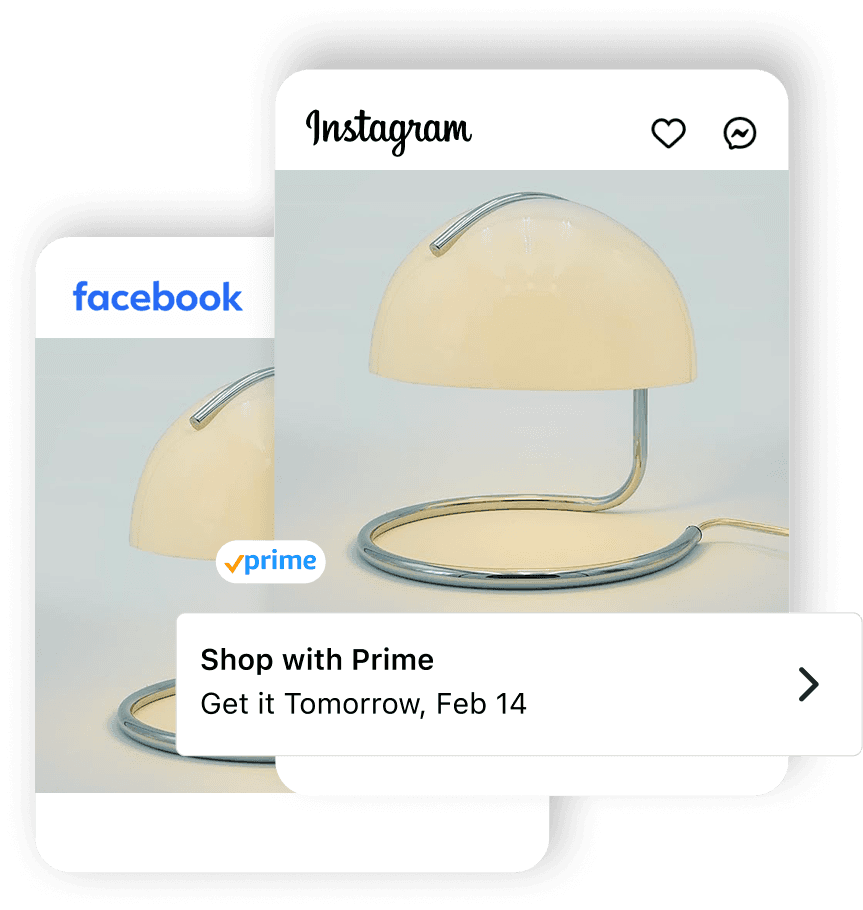
People find inspiration and discover new products on social media, outside of Amazon. But they often don't trust unknown merchants with payment, shipping, and returns, and abandon the purchase. To bridge the gap between inspiration and purchase, Amazon and Meta partnered up to bring the trust and convenience of Prime shopping directly onto Instagram and Facebook ads.


I led the design of the shopper experience for Amazon's first social commerce integration from 0 to 1, partnering with Amazon's merchant UX team and Meta's ads team to ship one end-to-end experience. This work helped shape how people discover and purchase products from Amazon and Buy with Prime merchants, meeting shoppers where they are in their shopping journey. Shortly after the launch, we expanded the partnership with TikTok.

ROLE

Lead UX Designer

Lead UX Designer

PLATFORMS

Mobile & desktop

Mobile & desktop

YEAR

2024

2024

TEAMS

Buy with Prime

Core Reviews

CHALLENGE

CHALLENGE

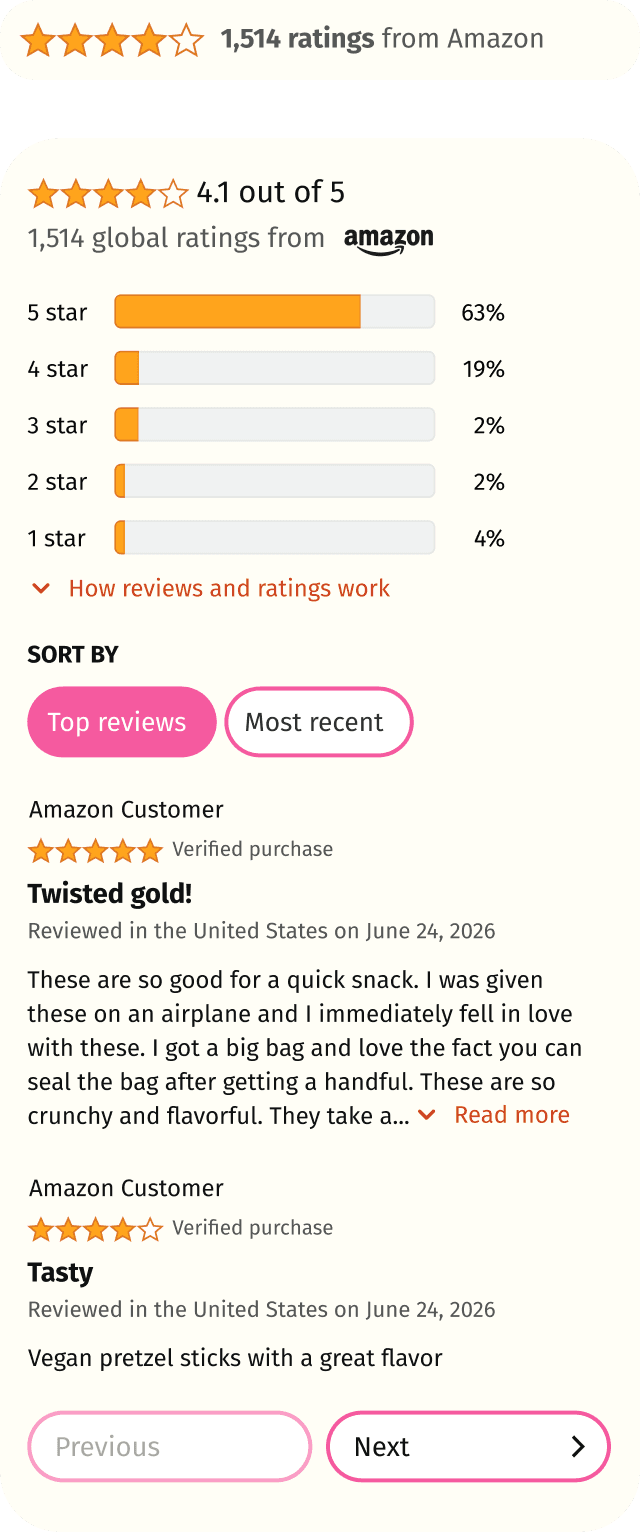
Merchants wanted to display Amazon reviews on their sites, but the MVP only allowed changing the corner radius, the number of reviews shown, and light/dark mode. With no other way to make the reviews and ratings blend in on their sites, Amazon's branding took over their product pages.

As we introduced more customization, we needed to balance four competing needs:

  • Emerging merchants wanted to lean on Amazon's branding for credibility.

  • Established merchants wanted the reviews to look like their own brand.

  • Amazon needed to protect the recognition they've built over 30+ years.

  • Shoppers needed to know the reviews were real Amazon reviews.

The experience had many players behind the scenes: Meta surfacing the ads, either Amazon or a Buy with Prime merchant selling the product, and Amazon handling the product details, checkout, and fulfillment. But to shoppers, it's all just Amazon. We needed to:


  • Show Prime trust signals at the moment of discovery, without turning non-Prime shoppers away

  • Make it clear who's selling, fulfilling, and supporting their order at every touchpoint, across 15+ scenarios

  • Get shoppers to link their Amazon account once to unlock faster checkout and improved personalization

The MVP experience on DTC site

CHALLENGE

Merchants wanted to display Amazon reviews on their sites, but the MVP only allowed changing the corner radius, the number of reviews shown, and light/dark mode. With no other way to make the reviews and ratings blend in on their sites, Amazon's branding took over their product pages.


As we introduced more customization, we needed to balance four competing needs:


  • Emerging merchants wanted to lean on Amazon's branding for credibility.

  • Established merchants wanted the reviews to look like their own brand.

  • Amazon needed to protect the recognition they've built over 30+ years.

  • Shoppers needed to know the reviews were real Amazon reviews.

The MVP experience on DTC site

APPROACH

APPROACH

  1. Identify Amazon brand recognition signals

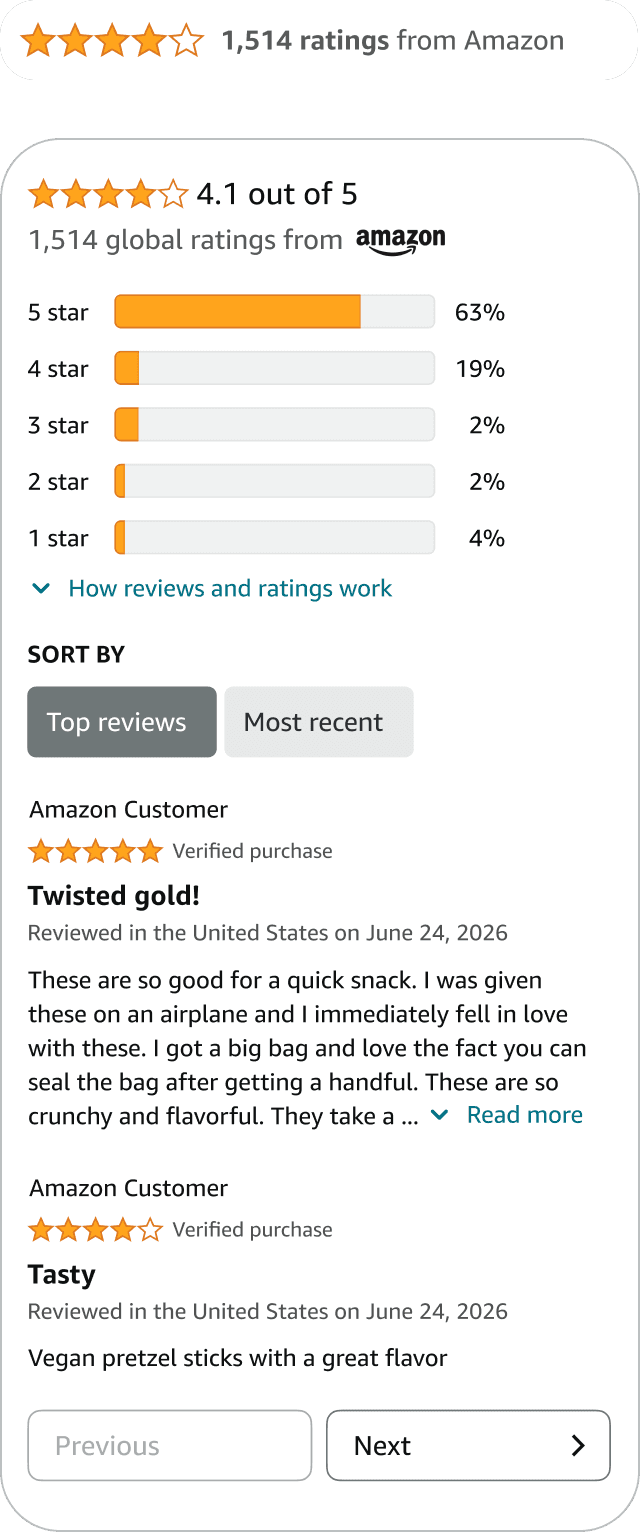
I hypothesized that shopper trust and Amazon brand recognition were tied to specific signals. To identify them, I ran unmoderated studies testing the styling changes merchants requested most: fonts, background color, and star rating colors. We learned that much of what merchants wanted was safe within the right constraints, like limiting fonts to four research-backed presets or allowing transparent backgrounds with accessibility guardrails. And we found the key recognition signals, like the classic Amazon orange stars, had to remain consistent across different merchant sites.

  1. Offer flexibility within guardrails

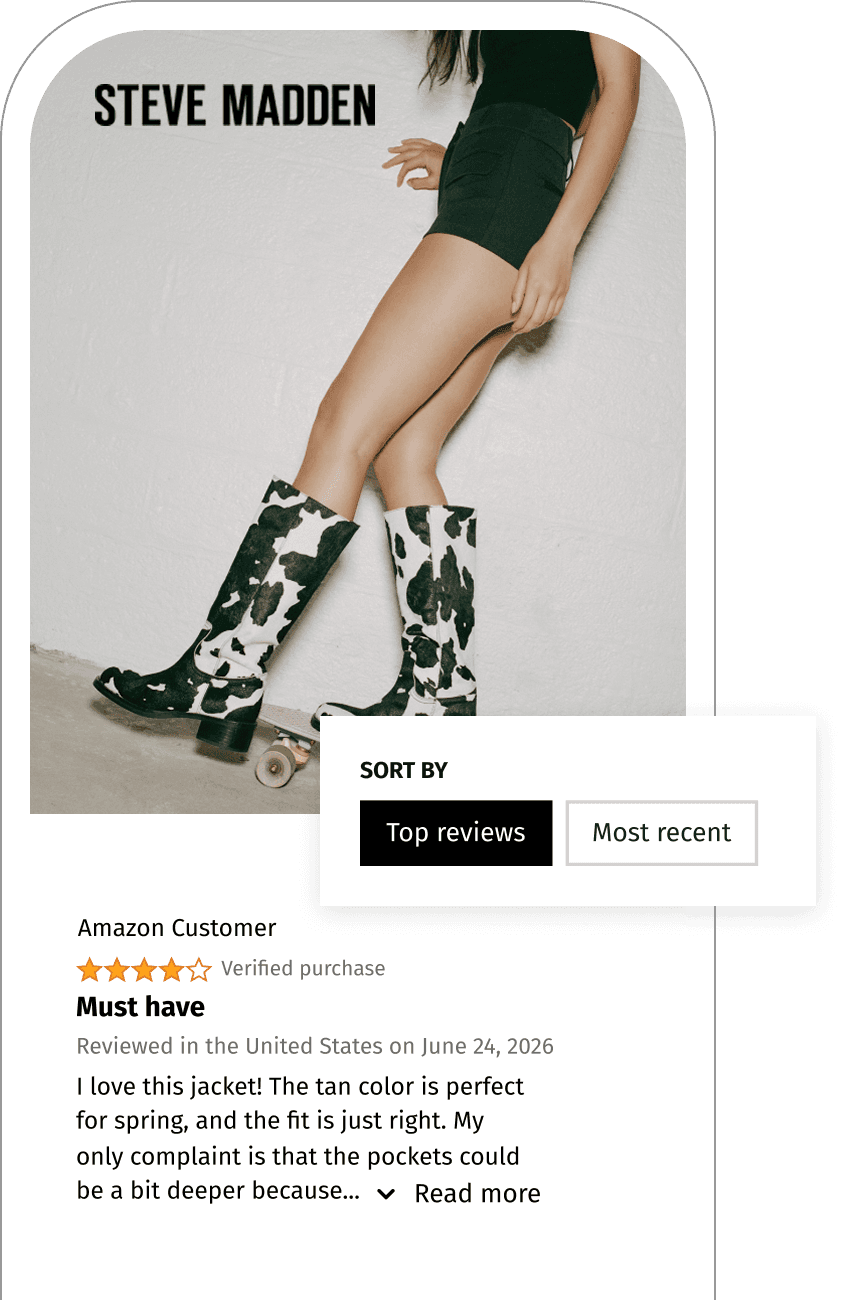
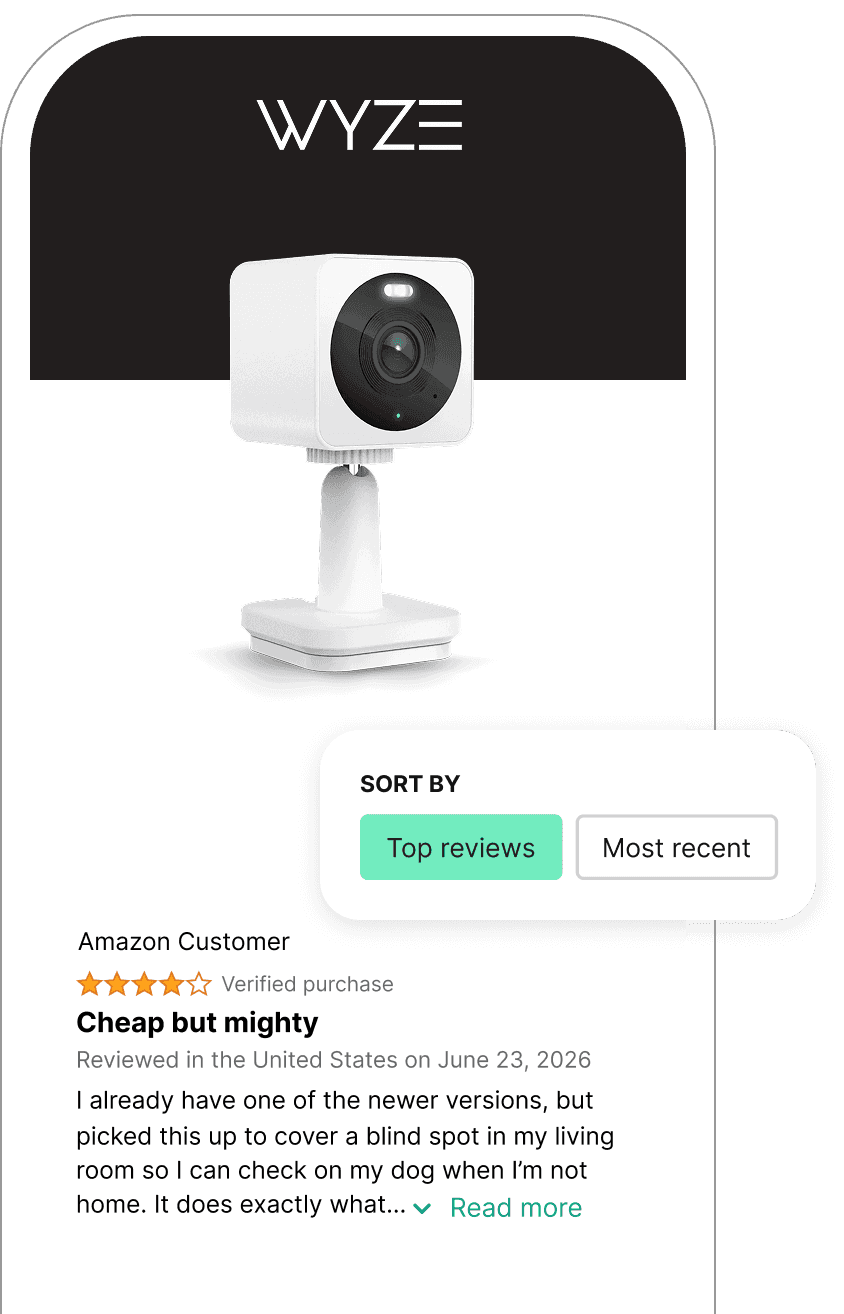
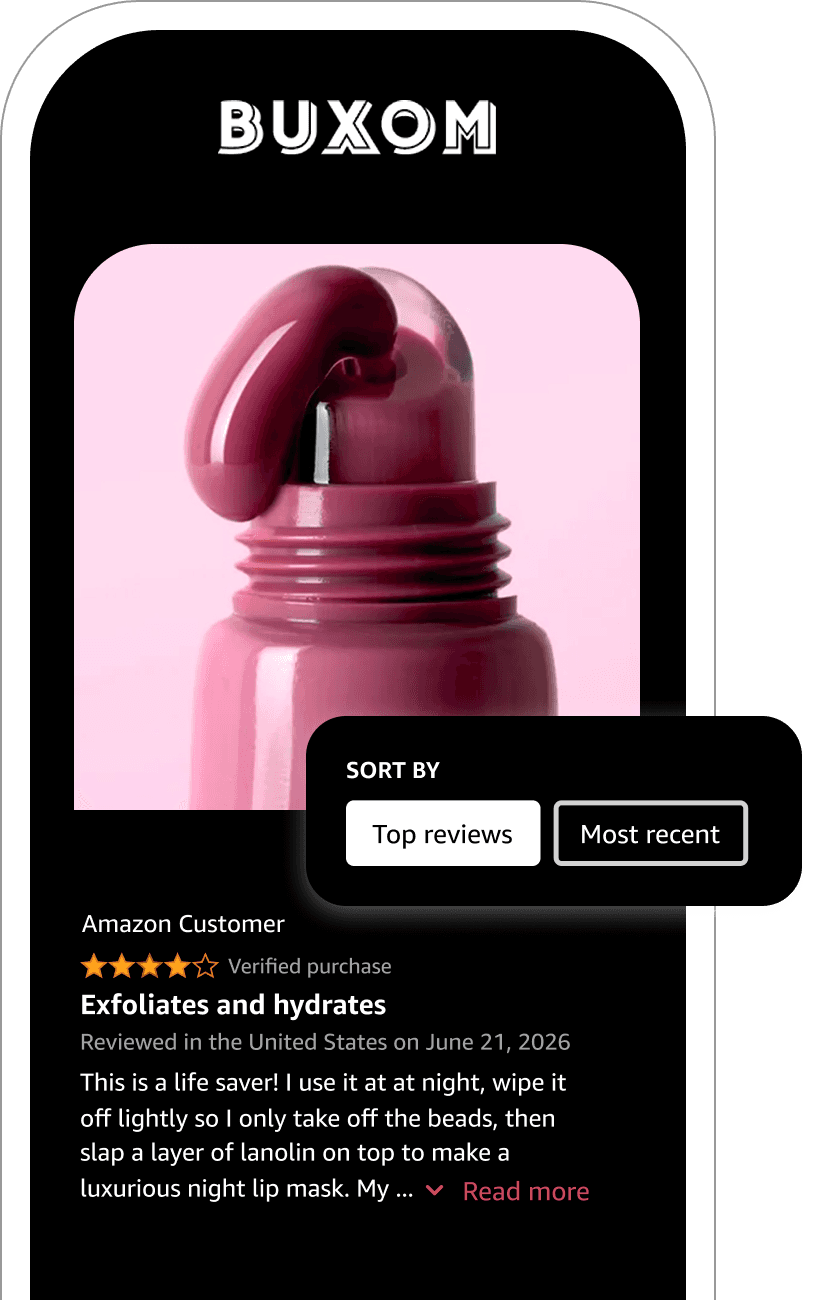
We turned the findings into a simple model: protect the elements that carry trust or Amazon brand recognition, and offer flexible controls for the rest, like buttons, links, and expanders, to match the merchant's site. Once I defined what shoppers see on merchant sites, the merchant UX designer shaped how merchants configure those controls in their editor. As a result, reviews looked integrated into the merchant's site without losing Amazon's trust signals.

  1. Build a system, not one-off decisions

As we took an iterative approach to find how much customization was too much, I designed a framework to help the team assess each new request against brand recognition and shopper trust at scale. Partnering with a technical writer, PM, and legal, I published the first guidelines for how Amazon reviews appear outside Amazon, now referenced by merchants and partner teams.

Default vs. Customized
IMPACT

Adoption

Increased merchant adoption after introducing customization controls.

Scale

Created the first framework for how Amazon reviews appear outside Amazon, now used for every new feature.

Collaboration model

Established the working model between the off-Amazon and Amazon.com orgs.

Alignment

Defined design principles for customization, reviewed and aligned across orgs and leadership.

LOOKING BACK

This work was less about styling widgets and more about designing for surfaces we don't own. When you don't control where your product lives, design shifts from delivering pixels to designing the building blocks and guardrails that scale to every new merchant and surface. It changed the question I start with, from "what should this look like" to "what rules produce the right outcomes."

See complete project breakdown in Figma Slides.

See complete project breakdown in Figma Slides.

Continue to Figma

People often don't trust the reviews on direct-to-consumer (DTC) sites, because they think merchants filter out the bad ones, so they seek external reviews on Amazon to get a holistic view before purchasing. Reviews from Amazon closes that gap by bringing Amazon reviews onto DTC sites, helping merchants increase conversion by 38% on average. However, the reviews looked so much like Amazon that they felt out of place on merchants' sites, leading to lower product adoption.


I led the customization strategy for how reviews and ratings appear to shoppers by partnering with the merchant UX team to find the balance: what merchants could customize, and what stayed protected so the reviews remained recognizable and trusted as real Amazon reviews. This work helped drive product adoption and shaped design principles for how Amazon reviews appear outside Amazon.com.

ROLE

Lead UX Designer

PLATFORMS

Mobile & Desktop

YEAR

2023-2025

TEAMS

Buy with Prime,

Core Reviews